


“I honestly thought buying her a really soft bed was enough. But she’d still curl up so tight I could barely see her little face. When I read about holding onto her own body heat and reflecting it back to her, I thought, that sounds like exactly what she needs. I put the mat beside me on the couch and she had a good sniff before getting on it. The first time I looked over and saw her with her paws out, I made my husband come and look lol. She still sleeps in other places, but she’s on this thing most evenings now.”
Feline Wellness Insider™
Top Veterinarian: If Your Older Cat Keeps Curling Up Tight, They May Be Avoiding Something You Haven’t Seen
“Most owners think their cat is simply slowing down. But a small change in how they sleep may show that something is making them uncomfortable.”
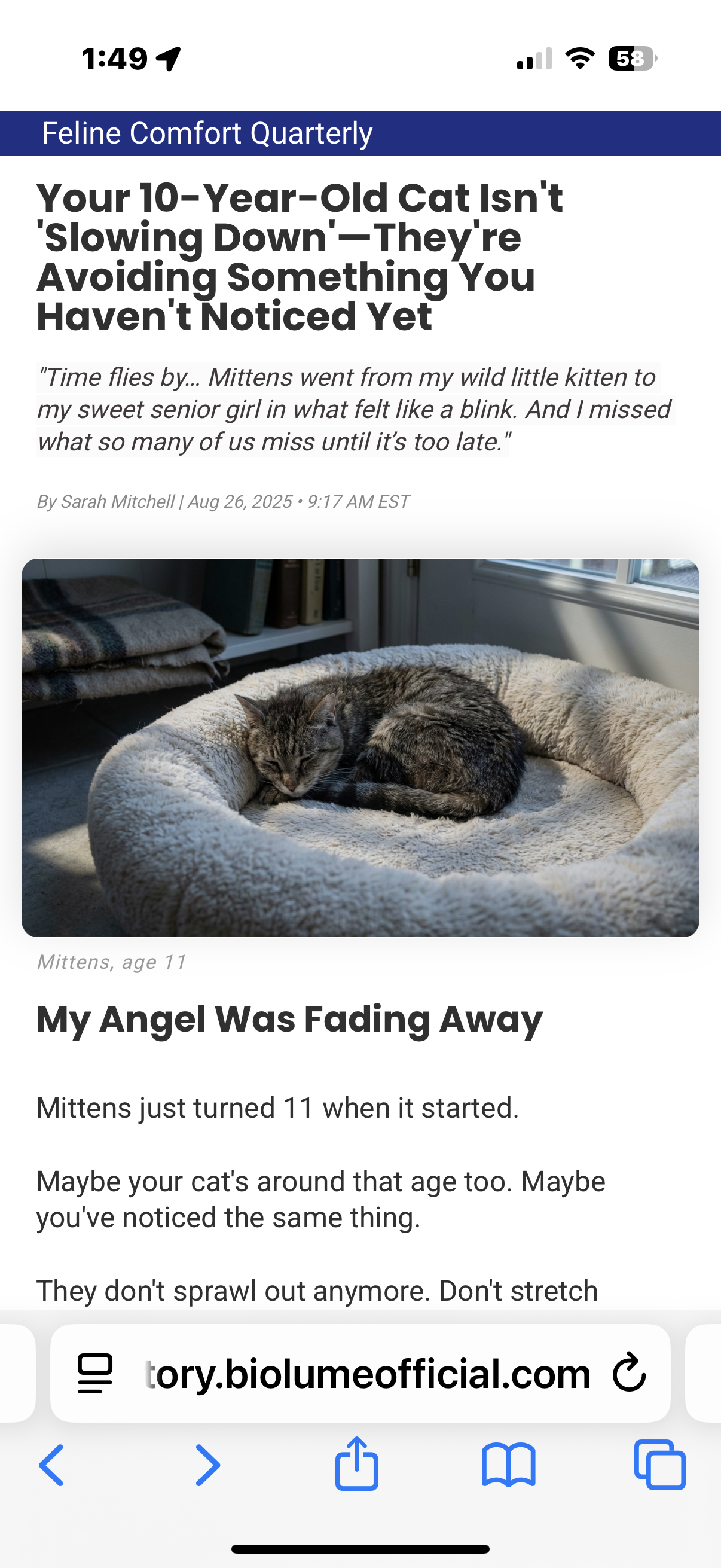
The Pattern I Kept Seeing in Older Cats
Mittens was 11 years old when her owner brought her to see me.
“She’s just getting older,” she told me.
Maybe you’ve said the same thing about your cat.
Mittens didn’t spread out across the couch anymore. She didn’t stretch her legs out like she used to.
Instead, she curled herself into a tight little ball.
Sometimes she curled so tightly that her face disappeared under her tail.
Her owner had already done what most loving cat parents would do.
She bought Mittens a soft bed. A heated pad. The warmest blankets she could find.
But Mittens kept curling into that same tight ball.
She would lie down, move a few minutes later, turn in a circle, and curl herself up again.
At first, this didn’t seem strange.
Older cats sleep more. They move less. Their habits can change as they age.
But as a vet, I’ve learned that “getting older” is not always the full answer.
It is a reason to look more closely.
A change in how your cat sleeps can have many causes.
Pain, sickness, fear, and sore joints can all change the way a cat rests.
If the change happens fast—or your cat also stops eating, loses weight, hides, or has trouble moving—you should take them to a vet.
A health check should always come first.
But once those larger health problems had been checked, I saw another clue.
Mittens wasn’t only getting older and sleeping more.
She looked like she was trying to hold on to her body heat.
And her soft, costly bed wasn’t helping.
Because soft and warm are not the same thing.
A bed can feel very soft beneath your hand while still letting your cat’s body heat escape.
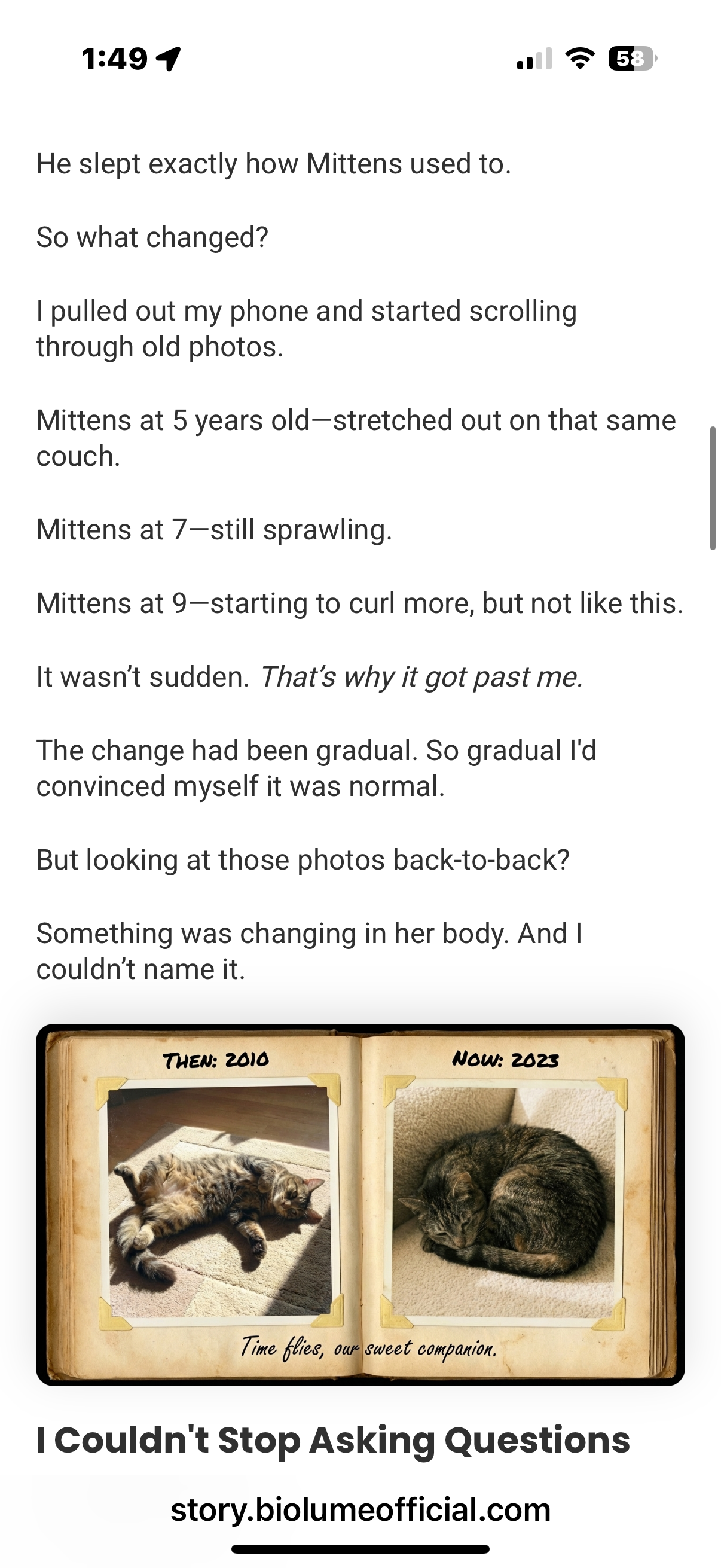
A few days later, Mittens’ owner sent me two photos.
The first showed Mittens at five years old.
She was spread across the couch with her legs pointing in every direction.
The second showed her at eleven years old.
She was on the same couch. But now she was curled so tightly that her nose was pushed under her tail.
Then her owner sent me another photo from when Mittens was seven.
She was still stretching out.
Then she sent one from when Mittens was nine.
That was when the tight curling had started.
But it had only changed a little at first.
The change happened so slowly that no one saw it happening.
That is why signs like this are so easy to miss.
When something changes little by little, we get used to it.
We tell ourselves:
She’s just getting older.
He has always slept like that.
Older cats don’t stretch out as much.
But when we placed Mittens’ old photos next to each other, the change was easy to see.
Her body had been trying to tell us something long before anyone knew what to look for.
I Started Asking Owners a Different Question
After seeing the change in Mittens’ photos, I started watching this behavior in other older cats.
I didn’t only ask if they were sleeping more.
I asked owners to look at how they were sleeping.
Did their cat still stretch out?
Could they lie still and rest?
Or did they curl up tight, move around often, and keep looking for a new place to sleep?
Then I started asking one simple question:
“Does your cat relax more in the warmest part of your home?”
Again and again, the answer was yes.
Their cats stretched out in the sun.
They rested near a heater.
They relaxed against their owner’s body.
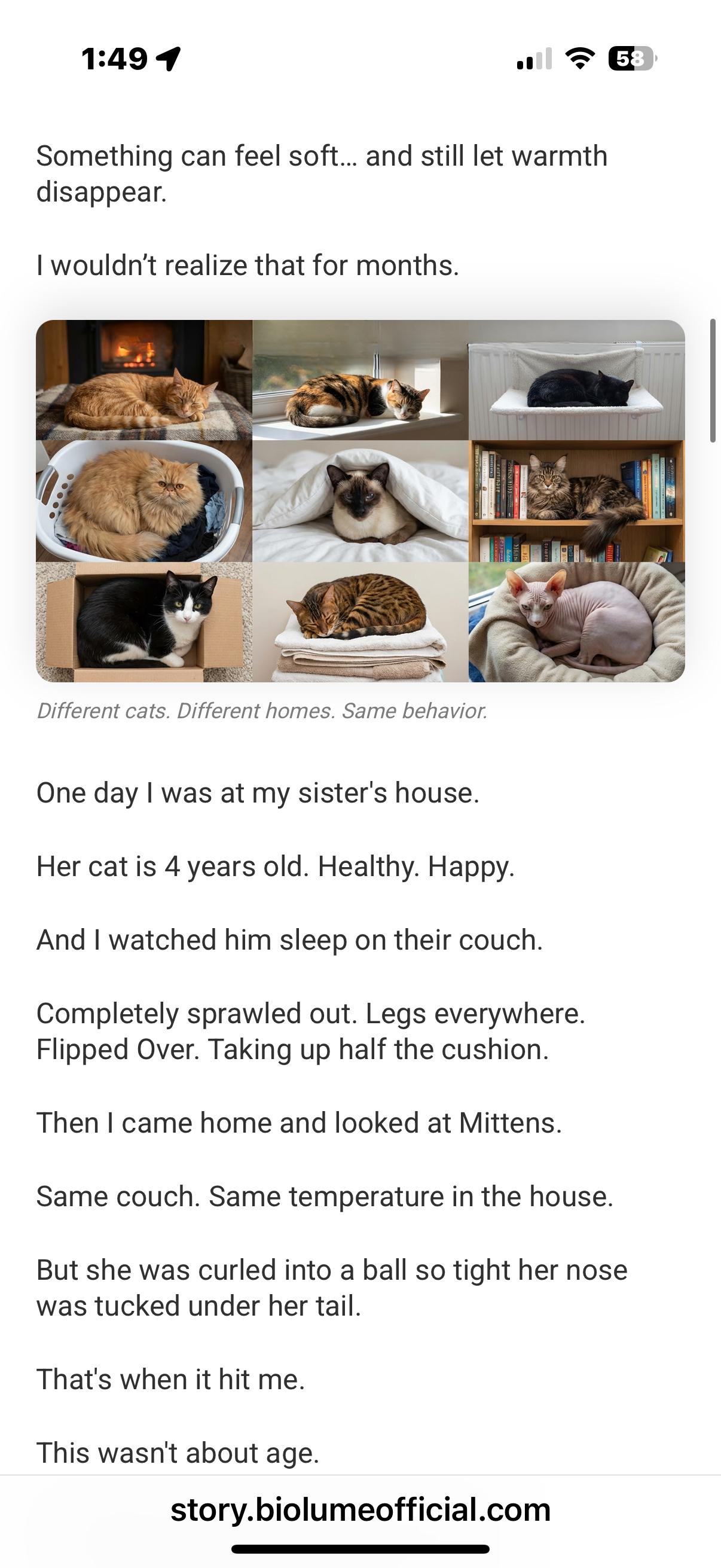
But on a normal couch, floor, or soft bed, they went back to that tight little ball.
Curling up is normal for cats.
It does not always mean something is wrong.
But if an older cat starts curling much tighter than before—or cannot seem to lie still—the place where they sleep may not be keeping them as warm as it once did.
Some older cats move less than younger cats.
They may also lose muscle or body fat as they age.
Because of this, some older cats may look for warm places more often.
This is where many loving cat owners make a small mistake:
They buy a softer bed.
But most pet beds are made to feel soft.
They are not made to hold heat.
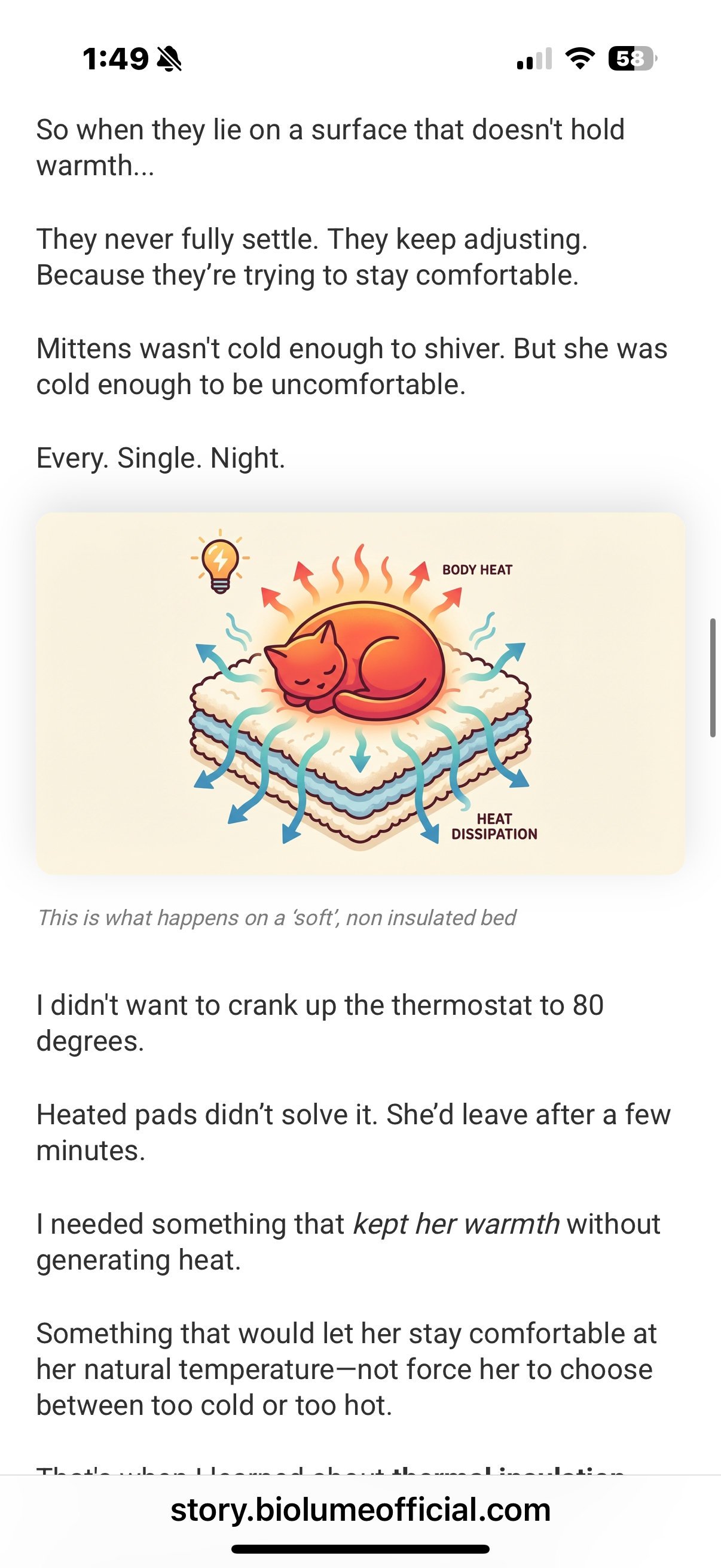
The cloth may feel warm and cozy at first. But it can still let your cat’s body heat escape through the bottom of the bed and into the air.
Your cat can sink into a thick, soft bed and still have trouble staying warm.
Mittens wasn’t shaking.
Her house wasn’t freezing.
But she may have been just cold enough to stay tense.
She curled up tight and kept moving because her body was trying to stay warm.
Turning the heat up in the whole house was not a good answer for Mittens’ owner.
A powered heating pad did not feel like the right answer either.
Mittens would leave it after a few minutes.
Her owner also worried about leaving it plugged in all day.
What if it became too hot?
What if Mittens chewed the cord?
Mittens did not need something that kept making more heat.
She needed something that helped hold on to the warmth her body already made.
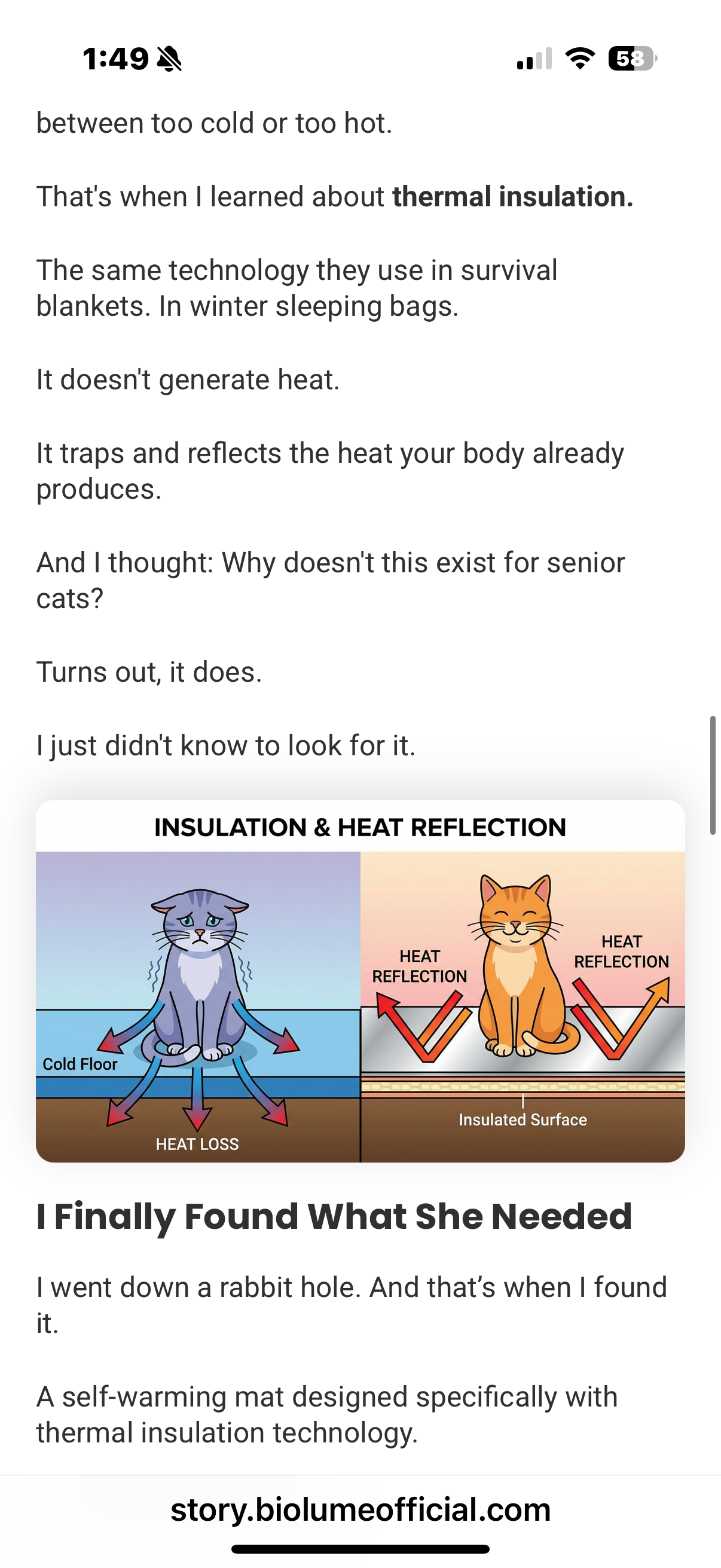
This is called thermal insulation.
It may sound complex, but the idea is simple.
It is the same idea used in space blankets and warm sleeping bags.
It doesn’t need to make new heat.
It helps stop your body heat from escaping.
It can also send some of that warmth back toward your body.
Instead of making a cat choose between a cold bed and a powered heating pad, you give them a place that works with their own body heat.
The Self-Warming Mat I Suggested
I began looking for a place to sleep that had three things:
Softness.
Warmth.
And no plugs or cords.
That’s when I found the ThermaPaw Self-Warming Pad.
What made it different wasn’t only how soft it felt.
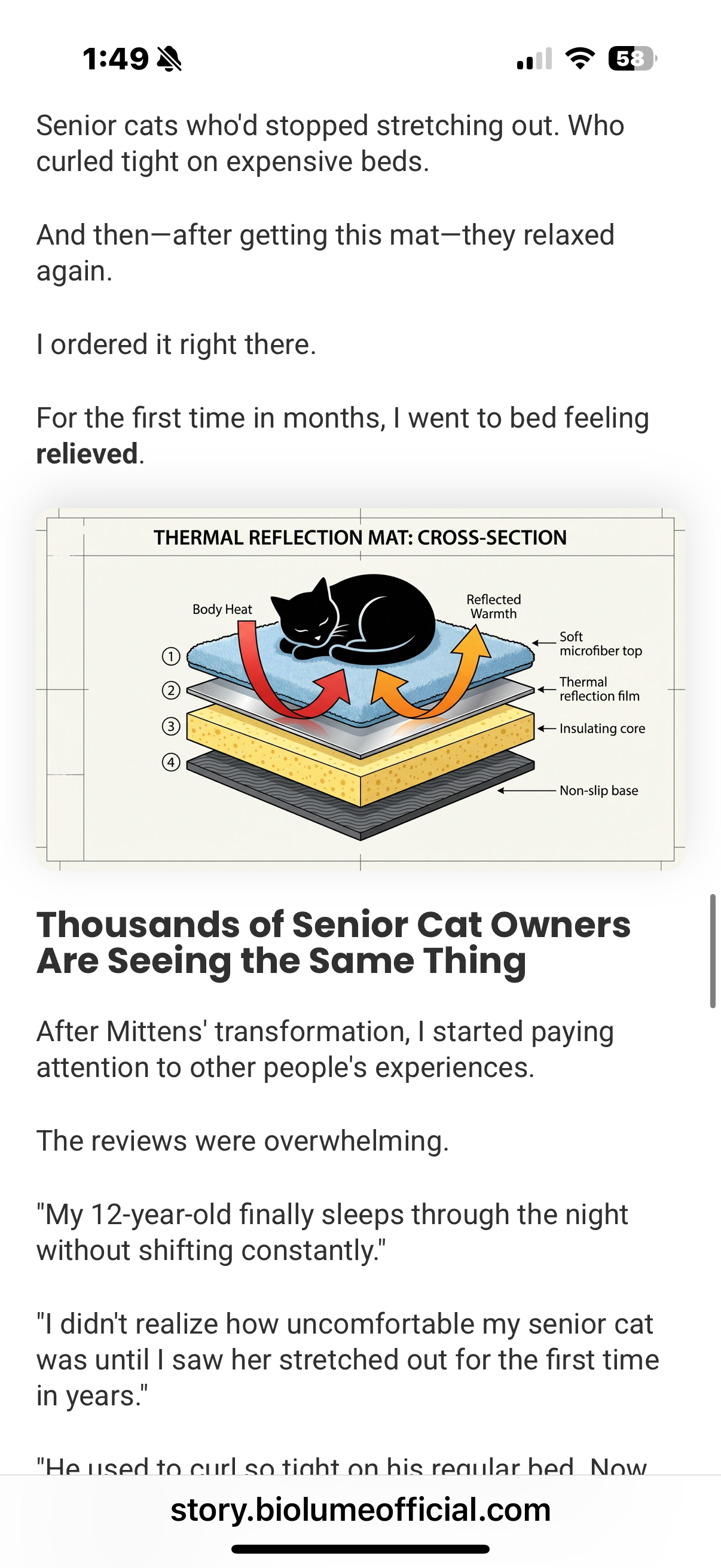
It was the way the layers worked together.
The bottom layer forms a wall between your cat and the cold floor, couch, or bed under them.
This helps stop warmth from escaping through the bottom.
The middle layer sends some of your cat’s body heat back up toward them.
The top layer is soft and cozy.
That way, older cats can have the softness they enjoy while also holding on to more of their own warmth.
There are no plugs.
No heat settings.
No powered parts that keep getting hotter.
The mat simply helps your cat hold on to the warmth their body already makes.
For Mittens, that difference mattered.
She would not have to lie on a powered heating pad.
She would not have to get up and move once it became too hot.
She could rest at the temperature that felt right to her.
I told her owner that the mat was not a medical treatment.
It should never take the place of a vet visit when a cat’s behavior changes.
But after larger health problems had been checked, making Mittens’ sleeping spot warmer was a smart next step.
Her owner ordered one that night.
What Happened When Mittens Tried It
When the mat arrived, Mittens’ owner placed it on her favorite part of the couch.
At first, Mittens wasn’t sure about it.
She smelled one corner.
Then she stepped onto it and stood there for a few seconds.
At last, she lowered herself onto the mat.
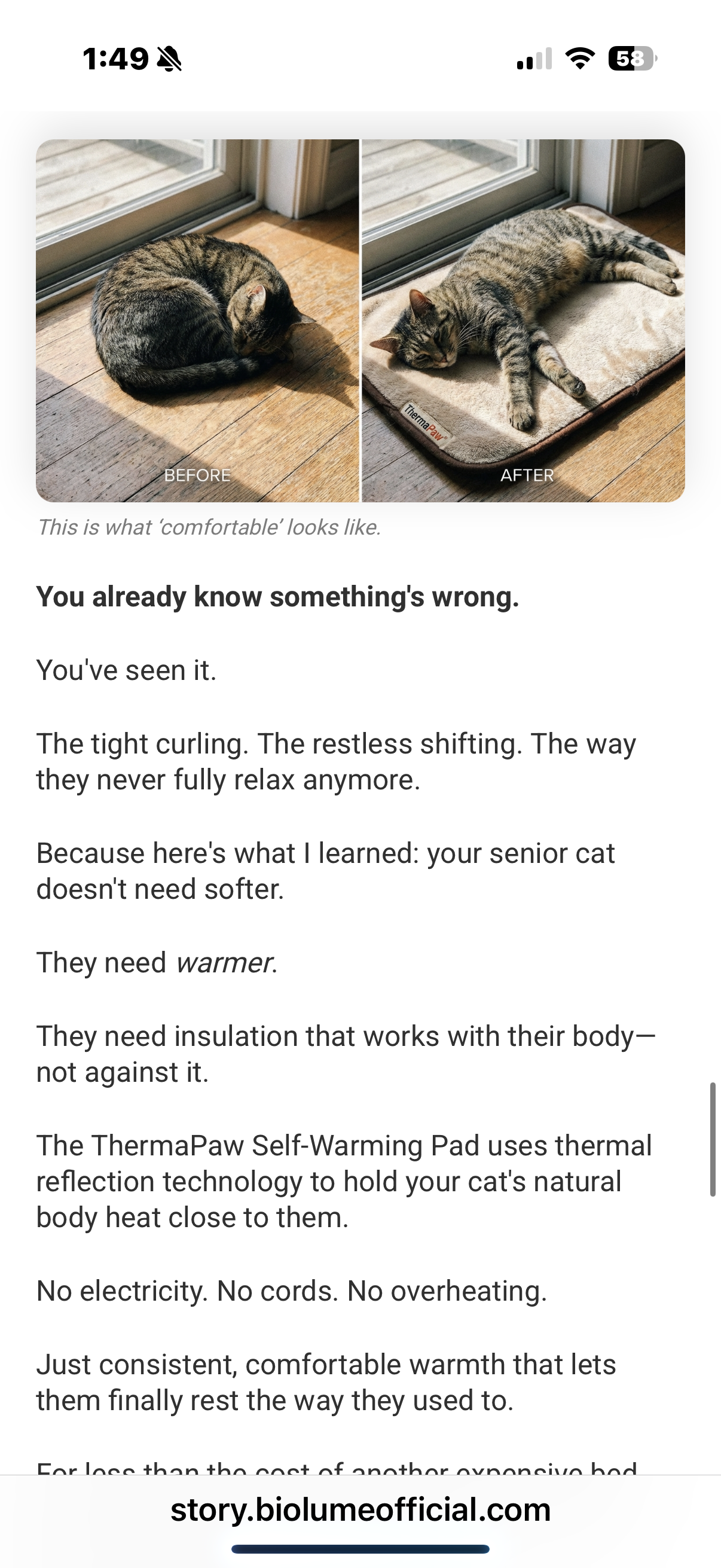
Her owner watched as Mittens curled into her normal tight ball.
But over the next few minutes, her body began to loosen.
Her front paws moved away from her chest.
Her head came out from under her tail.
Her tight little ball became a soft, relaxed curl.
Then she looked up at her owner and gave her a slow blink.
A little later, Mittens stretched one leg out behind her.
It was a tiny move.
But her owner had not seen her do it while resting in months.
She sent me a photo right away.
Under the photo, she wrote:
“I didn’t know how tense she had been until I saw her relax.”
That day, Mittens stayed on the mat for her whole nap.
It soon became her favorite place to sleep.
Her owner later bought three more mats for Mittens’ other favorite spots around the house.
Eight months later, she told me Mittens still chose those mats every day.
Why So Many Older Cat Owners Know This Pattern
Once you know what tight curling may mean, you start to see the same pattern in many older cats.
A cat curls into a tight ball even though they are lying on a costly bed.
They keep moving during the night.
They look for sunlight, clean laundry, warm laptops, heaters, and their owner’s lap.
Then they are given a soft place that helps hold their body heat.
And their body starts to change.
Some cats stretch their legs out.
Some sleep longer without moving around.
Others simply curl up in a softer and more relaxed way.
These changes may look small to someone else.
But to a person who has watched their cat grow older, they can mean everything.
One owner said her 12-year-old cat finally slept through the night without moving every few minutes.
Another said she did not know how tight her older cat’s body had become until she saw him stretch out again.
A third said her cat had ignored several costly beds but chose the self-warming mat every afternoon.
These cats did not become young again.
They simply had a place where their bodies did not have to work as hard to stay warm.
That matters even more as cold weather gets closer.
Floors get colder.
Couches lose warmth faster.
Sunny places go away earlier in the day.
If your older cat already looks for warm places, you may see this behavior even more during the winter.
Your Cat May Not Need Another Softer Bed
You know your cat better than anyone.
You know how they used to sleep.
You remember when they spread out across the couch.
You remember when they stretched into strange positions or somehow took up half the bed.
If that has slowly changed, don’t brush it off as age.
First, pay attention.
If the change happened fast—or you see other signs that worry you—take your cat to a vet.
But if your cat has had a health check and still curls up tight, looks for warm places, or keeps moving while trying to rest, their bed may be part of the problem.
Your older cat may not need something softer.
They may need something that holds warmth better.
The ThermaPaw Self-Warming Pad has a special inner layer that helps send your cat’s own body heat back toward them.
No power.
No cords.
No parts that keep getting hotter.
Just a soft and warm place that helps your cat hold on to the heat their body already makes.
For less than the cost of another fancy bed, you can give your cat something much more useful:
A place where their body does not have to work so hard to stay warm.
A place where they can rest without moving every few minutes.
A place where they may finally feel warm enough to stretch out and sleep.
Mittens could not tell her owner what she needed.
But her body had been showing the signs for months.
Once her owner knew what to look for, the change was clear.
Your cat may be showing you the same thing.
You just need to know what to watch for.

Comfort they can feel.
Peace of mind you can see.
TRUSTED
CUSTOMER
REVIEWS
CUSTOMER
REVIEWS

“My first thought was, I don’t want another thing plugged in all day. Then I read that it uses her own body heat, so there’s nothing to switch on. That was what made me give it a try. I put it on the chair next to my desk and of course she ignored it at first. Later that afternoon I turned around and there she was, fast asleep on it. Now I leave it there and she comes and goes as she pleases, which is pretty much how she runs the whole house anyway.”

“We have two cat beds he won’t even look at, so I wasn’t sure about buying him anything else. But the bit about soft not always meaning warm made sense to me. I put this on his usual spot by the window instead of trying to get him to sleep somewhere new. He walked over it a few times before he finally settled down. Now when I check on him, his head is out and he’s in this loose little curl instead of that tight ball. I know it sounds like such a small thing, but I could sit and watch him sleep there all day.”